Blueberry Summer
Elisabeth Ogilvie
1956, Whittlesey House
(edition shown: Tab Books, Scholastic)
She was seeing herself, or rather a version of herself that no one had ever seen, wearing the charcoal Bermuda shorts and the pink Italian-style shirt; the short yellow shorts and the strapless sun bra; the white-satin swimming suit against which her tan would have a warm rich glow.
16-year-old Cassandra Phillips, sitting on her bed in her parents' Maine farmhouse and dreaming over a catalog of new clothes, has no way of knowing her promised summer working as a waitress on Makinic is dissolving. Her glamorous older sister has broken a leg, triggering a chain of events that traps Cass at home to milk the cow, oversee the blueberry fields and wrangle her rambunctious 8-year-old brother Peter.
But being home all summer has advantages. A handsome older boy, Adam, arrives, and then a lazy artist who promises to fulfill Cass's dreams of a romance. There are problems too - the shiftless but friendly Blackwell clan become suspects in a string of lobster-trap robberies and a deer-jacking, and tourists wander into the blueberry fields.
Overall, an interesting and well-written book with an appealing heroine. Her silliness about her artist neighbor is painful but realistic, and her love-hate relationship with her little brother rings true. Even the slightly too-good-to-be-true love interest is realistic and likable.
Other books (for teens)
The Fabulous Year
Whistle for a Wind
How Wide the Heart
The Young Islanders
Becky's Islands
Turn Around Twice
Ceiling of Amber
Masquerade at Sea House
The Pigeon Pair
Come Aboard and Bring Your Dory!
Beautiful Girl
Too Young To Know
My Summer Love
About the author
1917-2006
A prolific writer, she was the author of over forty books, many set on the coast of Maine.
Links Obituary in the Boston Globe Obituary in the New York Times
It's sophmore year and Sue Morgan has one goal: become one of the popular crowd at her high school. A successful summer away has given her confidence, and the local stature of her older brother Gary, a football star at college, has given her a start. She nabs her school's football star, Pete Carroll, and every popular door opens from there. And so what if she no longer has time for old friends or studying? Being popular takes work, and so does keeping Pete happy. Over a long school year, Sue discovers just how much work it takes to stay in the popular crowd.
Pete finds it inconvenient to go steady with Sue when he'd like to date everything that shows interest, and leverages that into constant demands for more necking and more sexual activity. In his enthusiasm he kissed her long and passionately, prepared to go on from where she had stopped him before. It was a constant battle, Sue thought irritably, pushing him off and finally hitting him hard enough to make him listen.
She quickly becomes sick of fending him off, though the author makes it clear she does enjoy some of the sex play.
Sue felt the excitement building up. Even without liking him too much, she could be easily aroused, and she half dreaded, half anticipated the approaching love-making.
Sadly timeless is Sue's weary, cold-blooded realization halfway through the year that she can live with that, with sexual activity she doesn't enjoy much with a boy she doesn't love. Her unease at his ethical shallowness goes much deeper. His personality can be summed up by his comment:
Say, I like your brother, Sue. He's a real contact.
Pete is an operator. It's interesting that in a book written in what is now considered a sexually repressive time, Emery gives his calculating opportunism as much moral weight as his pressuring Sue for sex.
Sue's siblings are her greatest asset; older brother Gary's popularity is her key into the crowd, while her more thoughtful brother Sandy gives her a different perspective on popularity and Pete, and her little sister Marilyn's progress into the same crowd gives Sue a vague sense of not wanting her baby sister in the same things she's gotten into. Her parents are hopeless; a cipher dad and a mother who accepts everyone at face value.
Sue's progress from adoring the football hero to coldly assessing her complete lack of affection for him - and her dying interest in any boy - is chilling.
Author Bio
1907-1987
Anne Eleanor McGuigan was the eldest of five children with a father who was a professor. She graduated from Northwestern University in 1928, spent a year traveling with her family, and then began teaching. She married John Emery in 1933, and had five children. The Illinois town of Evanston appears to be the model for Sherwood; she lived in Evanston most of her life.
Jane Ellison 4-H
County Fair
Hickory Hill
Sweet Sixteen
Pat Marlowe
First Love True Love
First Orchid for Pat
First Love Farewell
Sue Morgan
The Popular Crowd
The Losing Game
Other Books
Scarlet Royal
Vagabond Summer
That Archer Girl
Married on Wednesday
A Dream to Touch
Tradition
Bright Horizons
Mountain Laurel
Jennie Lee, Patriot
American Friend: Herbert Hoover
Mystery of the Opal Ring
Danger in a Smiling Mask
Carey's Fortune
The Sky Is Falling
Free Not to Love
Stepfamily
Spy books
A Spy in Old Philadelphia
A Spy in Old Detroit
A Spy in Old New Orleans
A Spy in Old West Point
Sally Burnaby's a 17-year-old whose long summer after high school graduation is a mixture of the delights of having a steady boyfriend and the frustrations of being almost but not quite an adult. Despite the dated nature of the material - did that world ever exist, even in 1950? - and the way the author's evasion of certain topics makes her heroine look a bit dim at times, it's a more honest examination of being female, young and (inescapably) naive than most of the current crop of cutting-edge problem novels.
At the book's start, Sally appears to be just a cute teenager. She's completely absorbed with her boyfriend, Scotty, and restless with being more than a child and less than an adult in a busy family. She's set to attend college in the fall, but she grows increasingly aggravated by her own sense of inadequacy as the summer progresses. Scotty, for all his good qualities, possesses that typically male trait of overweening confidence, and Sally grows anxious to gain his approval. She's indifferent to tennis and diving, but struggles to get better at both because he excels at them and simply expects her to want to improve. She can drive a modern reader insane with this, and with the way she hesitates to even share a difference of opinion. But has this really changed? Don't many girls still fall into line with male opinion, become caught up in trying to 'live up' to male expectations even in subjects and fields that don't interest them? A more frustrating anarchronism is the way Sally's parents agonize over how the relationship will impact Scotty. I do not like this behavior, having had a similar conversation once with a brother who implored me not to 'hurt' a boyfriend. Boy-boy loyalty apparently trumps blood ties.
Apart from her romance, Sally's other major concern in this summer is her position in her family, and how that's changing. Aware suddenly that all her friends have summer jobs, she realizes belatedly that maybe she's expected to work too. When she does get a job, she hates it, does it poorly, and realizes belatedly that she was wrong to approach it with such slipshod indifference. And she spends her first paycheck on a frivolous item instead of contributing to the family finances or buying a needed coat. These are somewhat old-fashioned ideas; I wonder how many middle-class kids really feel pressured to help support themselves at 17 today - but one thing is timeless. Sally feels that all her bad decisions are irrevocable, that she just keeps digging herself in deeper without remedy. She's haunted by a steadily worsening sense of having repeatedly failed to understand or figure out the right thing, whether it be with Scotty or her job or her family. What she thought would be a beautiful summer with her steady boyfriend turns into a long, hard season of growing up, and by the end of it, both she and Scotty are panicking, so frustrated by their family woes and personal confusion that they agree to take a leap into a different life. But is marriage at 17 really what Sally wants?
The terms of 'going steady' are utterly outdated and adorable and largely alien to anyone born after 1940. Sally's observations of her coworker Carol, a 26-year-old who's desperate to find a husband and escape drudge work, are painfully realistic, even in the 21st century. Go to any library and choose 3 books with pastel covers, and they'll all be chick lit with Carol as the heroine. The only difference will be the modern format's fantasist insistence that most Carols are actually successful career women with expensive shoe collections. Sally's friend Millie, on the other hand, probably doesn't exist anymore. Sudden pregnancy usually derails modern youth engagements, it doesn't result in shotgun
marriages.
Author Bio
1907-1987
Anne Eleanor McGuigan was the eldest of five children with a father who was a professor. She graduated from Northwestern University in 1928, spent a year travelling with her family, and then began teaching. She married John Emery in 1933, and had five children. The Illinois town of Evanston appears to be the model for Sherwood; she lived in Evanston most of her life.
Other Books About the Burnabys
Senior Year - about Sally
Going Steady - about Sally
High Note, Low Note
Campus Melody
Jane Ellison 4-H
County Fair
Hickory Hill
Sweet Sixteen
Pat Marlowe
First Love True Love
First Orchid for Pat
First Love Farewell
Sue Morgan
The Popular Crowd
The Losing Game
Other Books
Scarlet Royal
Vagabond Summer
That Archer Girl
Married on Wednesday
A Dream to Touch
Tradition
Bright Horizons
Mountain Laurel
Jennie Lee, Patriot
American Friend: Herbert Hoover
Mystery of the Opal Ring
Danger in a Smiling Mask
Carey's Fortune
The Sky Is Falling
Free Not to Love
Stepfamily
Spy books
A Spy in Old Philadelphia
A Spy in Old Detroit
A Spy in Old New Orleans
A Spy in Old West Point
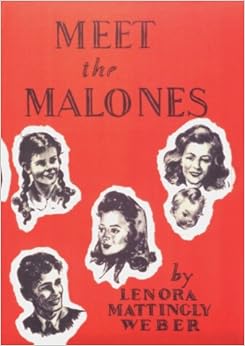
Mary Fred had just bought a horse. He was black and his name was Mr. Chips and Mary Fred was riding him home. The January wind had the moist breath of snow as it rippled the bridle reins, flapped the green scarf over Mary Fred's unruly dark hair, tugged at the end knotted under her tanned, squarish chin. She thought, "I've bought a horse." The thought could still startle her. For certainly she had not had the slightest intention of buying a horse with the money which had been sent her to buy a formal for the spring prom at school.
With this impulsive beginning we are introduced to 16-year-old Mary Fred Malone, the eldest daughter currently in residence at the ramshackle Malone house in Denver. Her widower father, Martie, is a columnist more involved in the war news than his family, leaving Mary Fred to organize the affairs of 15-year-old Johnny and 13-year-old Beany. When Martie trots off to cover the war news from Hawaii, Mary Fred decides to forgo the services of a housekeeper and split the salary between the siblings, who each have expenses: Mary Fred's upkeep of Mr. Chips, Johnny's new typewriter and Beany's remodeled bedroom. Things don't go smoothly, especially when their 19-year-old eldest sister, Elizabeth, returns home unexpectedly and sickly from a troubled pregnancy. But the two biggest cogs in the wheel of domestic harmony are Mary Fred's romance with high school hero Dike Williams (yes, I know) and the interfering kindness of their chic Philadelphia aunt.
A well-written, warm book which hits all the normal marks for books of this kind. A dead mother, a distracted father who has an intellectual yet underpaid job, a heroine who yearns to break free from drudgery but never will because she's so mentally enslaved, and a moral which rewards her slavish devotion to everyone but herself. All the males in her life spend their free time (which is plentiful, despite the fact they are forever held up as paragons of useful work) staring disapprovingly at anything she does which might be interpreted as, you know, selfish, and endlessly droning on about duty and how she'd be much happier supervising an impromptu Christmas play with pox-stricken 7-year-olds than skiing with a football hero.
I don't feel too bad for Mary Fred, though - she participates in other unsavory traditions of this breed of book. With the rest of her family, she casually scorns her neighbor, Mrs. Adams, who doesn't share the Malones's lively, warm, messy sense of what's important; Mary Fred loves to help Martie cater to a drunken old colleague, but she's indifferent and rude to the poor woman, who clearly hates living next door to a pack of obnoxious kids and their vicious dog.
It is a WWII book: Father said, looking around the table, "The fight's getting tougher. That means tougher on all of us." He wouldn't say more than that. But they knew he meant that they must give more of themselves, their work, their money. "Yes, we know," each one nodded soberly.
Yes, all right, it's war. And not just war, but THE war, the war against pure evil. But - I suspect that Martie Malone would have been like this anyway; he strikes me as a pain in the ass. He doesn't give up much. He clearly adores going off to Hawaii for work, he follows up this little lecture by lighting up his pipe, and he never seems to take a sabbatical from hectoring his womenfolk. Elizabeth, earlier, had dragged herself in off the prairie after giving birth in a shack, having been quelled by the menfolk into thinking:
"In times like these, we agreed, everyone has his own burden, and no one should add his. Don has his; Father has his; and this was mine."
I am agog to find out how this works out in divorce court; does he get custody of his war experiences while she retains full control of the children?
A short story collection divided into seasons.Very readable and likable, with a generally positive tone and upbeat resolution.
Winter
In "Second Love," Linda yearns after the girl-blind boy next door for years, only to see his first love be a glamorous newcomer.
In "A Living Doll," the crusading Marianna is impatient with her mother, who prefers to donate her hand-crafted dolls to a charity auction rather than show up at a fundraiser, but gains a glimmer of understanding when her boyfriend grows impatient with the stand she's taken on a malicious rumor.
In "Sister Act," Joan is terrified that her natural born flirt sister will snatch away a boy she's fallen for.
In "Won't Somebody Notice Me," Barbara discovers her little sister's value through the eyes of a boy she wants to impress.
Spring
In "End Of A Season" Margaret's happy security is threatened when her father grows ill and decides to sell their large family home; at the same time, she becomes aware that her heart doesn't belong to her boyfriend, now in college, but to herself.
In "The Shy One," Janey runs off to her uncle's for comfort when she simply can't stand being around her confident sister Joan one more moment.
Summer
In "Her Name In Lights," Linda chases stardom after seeing an old friend end up a movie star.But does she really want to put in the time and effort?
In "A Different Sort Of Girl," Jenny's first real relationship monopolizes her life, including the hobby she shares with her father - refinishing old furniture.
In "People Don't Live On Lakes," Terry is frustrated with her own dislike of her first real job - and tired of explaining to people that she does want to work, it's just that...
Autumn
In "Sweet Lorraine," Lorraine is estatic that her summer romance with the enigmatic, older Mike isn't over - then a little tired of dating an older guy.
In "A Time To Love," Joan's sudden popularity make her neglect an old friend and her family.
In "A Girl Of Spirit," Trudy visits her big brother at college and, away from their middle-class suburban hometown, is torn between the expectations of her parents and her own desires to be a doctor.
In "One You Love," Jennifer loses her summer romance and takes comfort in the experience of a friend, who recently became engaged after being desolate over another boy.
Vanished Worlds
The author was the editor for the teen magazines where these were originally published: Ingenue Magazine, Deb, and Co-Ed.Three words that have largely passed from use.
"You have this body in a raw silk right now," Eddie said of a sample he called a "very strong dress," apparently meaning it had been especially successful in the summer line."Now we're doing it in a light-weight wool."
17-year-old Mindy Hubbard is disconsalate on her brother's wedding day.Jack, at 22, has always been her buddy and her shining star.Now, watching him move off into a new life, she's aware that it's past time she made her own mark.But how, stuck as she is on her family's beautiful but remote Berks County, PA farm?
The answer comes when a sympathetic cousin, Alix Moore, asks her to come stay and work at her dress shop, The Country Cousin, on Philadelphia's Main Line.Mindy, aware she's a little overweight, goes on a diet and sets in to learn the dress shop business.Through her mistakes and trips to New York City's garment district, Mindy learns quite a bit about the business of selling clothes, but it's through Bob, the friendly son of a dressmaker, that she realizes what she wants to do - design.He's also the first person to drop the name Parson's, and give the recent high school graduate an idea of where she'd like to further her education.
On the romance front, the newly svelte Mindy dates a bored but handsome Peter Knox, the son of a wealthy Main Line family who resents the idea of anything changing his beloved foxhunting region.
A dark, remarkably handsome boy with imperious eyebrows and the golden bloom of an early summer tan.Peter seemed aware that most girls thought him attractive, so he made no special effort to be charming, behaving correctly out of habit but barely concealing a deep-rooted ennui.
Mindy, while wistful over his good looks, quickly learns he's a jerk, but takes some convincing that shaggy-haired, bespectacled Dana is the right choice.
And here you have a perfect meeting of the old and new - the sixties hair and pseudo-intellectual glasses are overtaking the perfect physical specimen.Cavanna, you must admit, was game to change with the times.In her older books, Mindy would have wrinkled her nose at shaggy and gone tripping after Peter.
Minor quibbles - Mindy's unnervingly amiable at being told she's too fat by her cousin, and there's a feeble attempt to conceal the obvious nepotism of Alix just happening to choose her family member out of all the store's staff to go to Paris with her.If it's about family, just admit it, already.
About the Author
Cavanna grew up in southern New Jersey, attended Rutgers and worked for the Westminster Press in Philadelphia.The store in this book really did exist; The Country Cousin was a dress shop in Bryn Mawr and Strafford, PA, owned by Dorothy Lewis Lummis.The Bryn Mawr location closed down around 1996, according to the Tredyffrin Easttown Historical Society History Quarterly Digital Archives.
Other Books
Accent On April
Almost Like Sisters
Angel On Skis
The Boy Next Door
A Breath Of Fresh Air
Fancy Free
Jenny Kimura
Mystery At Love's Creek
The Scarlet Sail
Passport To Romance
Stars In Her Eyes
A Time For Tenderness
Fashion note
The brand John Meyer is mentioned several times.This was a women's wear company based in Norwich, CT, and one of the places Perry Ellis worked.
The Second World War is finally over, but the Malone family is still struggling.Eldest daughter Elizabeth is awaiting the return of soldier husband Don while raising their now 3-year-old son.Their father, Martie Malone, is still recovering from the near-fatal bout of pneumonia which he survived only because Mary Fred missed a year of high school to nurse him.Johnny is racing time with old newspaperman Emerson Worth write a history of Denver.And 16-year-old Catherine Cecilia or Beany is hopelessly in love with Norbett Rhodes, a moody senior who has a history of hopeless adoration for Mary Fred.
This is Beany's story.Martie goes off to recuperate further, leaving the entire clan in her hands, a less-than-responsible but typical thing for Denver's most self-righteous crusading columnist to do.Before he goes, though, he triumphantly carries out a campaign against Norbett's guardian, the city's safety manager, for not enforcing traffic laws.By the time he's done, Norbett has sworn vengeance against the entire family, a vividly unpleasant problem for lovestruck Beany - and possibly for the complicated Norbett, whose guardians are not the warmest or most loving of people.
Beany: "You wouldn't feel right if you didn't have an excuse for hating the Malones."
Norbett: "I'd hate you whether I had an excuse or not, Beany.Because you're everything that I'm not.You like people - and everyone likes you.You're like that breakfast food on the radio - you're strengthened from the inside."
She, meanwhile, has come under the influence of a new friend's mother.Faye Maffley looks and acts more like her daughter's sister than her mother, and says that she's stayed so young and happy by not getting involved in unpleasantness.Beany, constantly harassed by unpleasantness like an old drunk reporter bunking on the sofa or the pain of losing foster kids back to their real parents, decides that from now on the Malones will look out for themselves first and not stick their necks out for others.
And she'd see that the other Malones didn't lay themselves open to disappointment and hurt.
This is, of course, not possible.Beany learns how impossible - and undesirable - it would be to change this aspect of her family, and gets her guy.
About the Author
1895-1971
The Beany Malone books
Meet The Malones
Beany Malone
Leave It To Beany
Beany and the Beckoning Road
Beany Has a Secret Life
Make a Wish for Me
Happy Birthday, Dear Beany
The More the Merrier
A BrightStarFalls
Welcome Stranger
Pick a New Dream
Tarry Awhile
Something Borrowed, Something Blue
Come Back, Wherever You Are
The Belford books
Don't Call Me Katie Rose
The Winds of March
A New and Different Summer
I Met a Boy I Used to Know
Angel in Heavy Shoes
How Long Is Always
Hello My Love, Goodbye
Sometimes a Stranger
Stand Alone books
My True Love Waits
Happy Landing
Sing For Your Supper
Nonie: An Autobiography
Wind On The Prairie
The Gypsy Bridle
Podgy And Sally: Co-eds
A Wish In The Dark
Mr. Gold And Her Neighborhood House
Rocking Chair Ranch
Riding High
My True Love Waits
For Goodness Sake! - cookbook
Beany Malone Cookbook - cookbook

 Posts
Posts