Another reader in search of a long-lost teen novel. Anyone recall this one?
I'm looking for a book where a young girl was attacked from behind,
hospitalized and was sent drugged chocolates which her nurses ate. She
recovered and went home to her father, David's estate. Her boyfriend, a
photographer, turned out to be the bad guy. Her father's partner,
Blair/Bruin protected her as best he could from everything, Something
about a boat explosion at the end. Thanks if you can help me find this
book!!
Monday, September 21, 2015
Monday, September 7, 2015
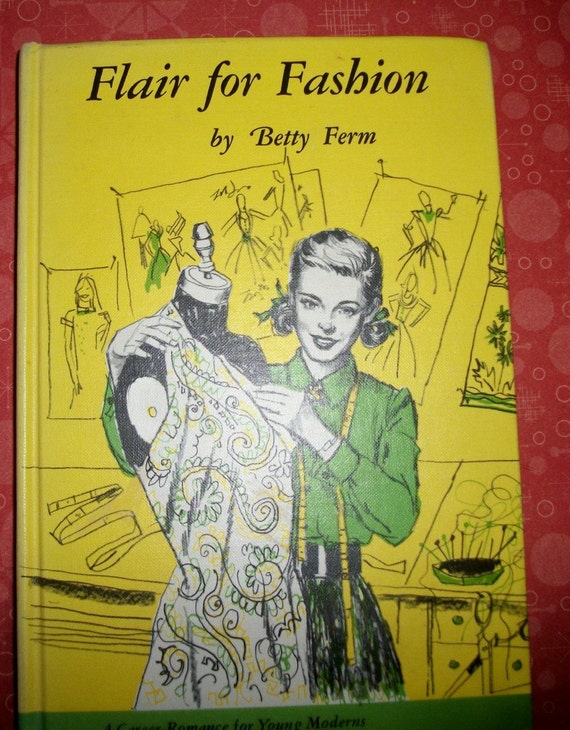
Flair for Fashion (1967)
Flair for Fashion
Betty Ferm
1967, Julian Messner
A Career Romance for Young Moderns
Her black hair was brushed
to perfection and capped her head in a casual, to the shoulder length. A new
white lace blouse enlivened the dark V of her jacket, and just the right amount
of powder duster the tip of her slightly tilted nose.
And thus are we introduced to Ellen Matthews, en route to
New York to claim her prize from fashion school; a six-month internship with Countess
Gardella at the House of Etienne.
She gave the gown a
pin-tucked shirt waist bodice with a long, cuffed sleeve. The suggested fabric
to be used was chiffon, with a low-cut matching colored slip. She added a
billowing skirt and indicated that the half-inch belt was to have a round buckle
made of the same chiffon.
This design wins her the internship, and is later dubbed
Black Magic. It not only wins Ellen her shot at New York success, it will
affect all her relationships at the House of Etienne. Starting with the Countess’s son, Tony. Because the Countess is ill when Ellen
reaches New York, and Tony is in charge. And her introduction to Tony is to overhear
him say he needs an experienced assistant, not “some callow kid who’s still wet
behind the ears.”
Meanwhile, in Ellen’s personal life, she’s bunking with conveniently
placed relative Aunt Laura, who lives in New York and is largely dismissed by
Ellen and her cozy nuclear family for being a finicky spinster. Already
interested in the Saint Louis ingénue is handsome blond ad man Bill Jennings,
whose company handled the contest for the House of Etienne. Bill’s a slick native New Yorker whose innate
sneakiness fascinates and repels Ellen in equal amounts. And of course, she ends up with a thing for
her dark, suave, faintly French boss, Tony.
Extreme amounts of clothing porn. Ferm describes what virtually everyone is
wearing in virtually every scene, and makes it clear that this is Ellen’s
fascination in life. Which is
great.
He was very handsome
in a black mohair suit with a woven silk tie. He wore a French-cuffed white
shirt with jeweled cuff links that matched his tie stud….
The descriptions are rather flat and overdone. This side is rather dull, for once.
But the motivations, and the tale of a young, rather naïve girl
thinking over her instinctive reactions to various situations – those are
wonderful. At one point, Ellen giggles
at the complicated process of ordering wine, and Bill tells her something she
had never considered before – that the fashion world involved more than
creative design, that ordering wine and being a social creature was part of the
business as well. In another fine
moment, Ellen’s assumptions about a fat friend – and about her boring, old maid
aunt - are exploded. Just as Ellen is mentally giving both women – one thin and
colorless, the other fat and dressed in loud patterns – a makeover, fat Mrs.
Boorman stuns her:
“Of course,” Mrs.
Boorman remarked, as they sat down at the table, “I could look even slimmer if
I wore solid colors.” Ellen almost dropped her tomato juice. It had never occurred
to her that Mrs. Boorman understood that.
She had assumed the heavy-set woman chose her flamboyant clothes from a
lack of judgement.
Mrs. Boorman continues that she kept up with the styles for
years, obediently changing with the times to suit each era.
“Then I decided to
take a stand. I picked the colorful dresses I liked best and stuck with them.
My daughters are horrified, but I’m happy.”
The romances were dull, the 1960’s swinging New York scenes
hysterical –
Greenwich Village was
alive with activity. Ellen caught glimpses of a dungareed girl with one blond
braid down her back, a thin, bearded fellow with a canvas under his arm, a
couple swaying jerkily outside a nightclub to a drum beat that echoed savagely
from within…
- and Ellen’s career plots were as predictable as the
romances. But the underlying
characterizations were very good, and the ideas good. The larger teen romance itself was just not
good.
Links
Kirkus review
Monday, August 24, 2015
Identify this book!
A reader emailed a book description, hoping I'd recognize their long-lost teen novel.
Quick
question, have you come across or do you remember a book from the 1950s
set at a college campus within the fraternity/sorority system? The most significant moment from the book is the "golden couple"
driving off down fraternity row and getting in a car accident that kills
them both. There's a similar moment in Anne Rivers Siddons "Heartbreak
Hotel" but it's not that book.
I couldn't help; it doesn't sound familiar to me. Anyone else?
Sunday, July 5, 2015
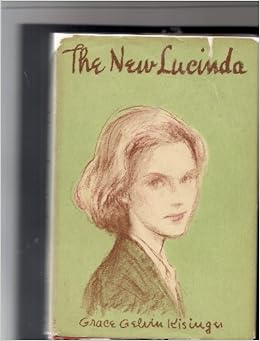
Grace Gelvin Kisinger,
1958, Thomas Nelson & Sons
Lucinda Taylor is 16, blonde, blue-eyed and tall but as a studious,
serious girl, she knows she’s not popular and she feels dull and ignored in her
hometown of Exeter. Reading a magazine
article, she finds inspiration in a story about a girl who transforms the way
she acts and how others think of her. Cindy wishes she could do this too, but
in a town where everyone’s known her since birth, how can she?
So it’s lucky her dad is transferred to Woodmont, a town
just far enough away to make Cindy’s makeover doable. And she pulls it off. She’s cool, she’s mildly indifferent, she’s
unenthusiastic – she’s everything a popular girl should be. Fighting her inclination to be friendly and
engaged with a group of friendly girls, Cindy instead cozies up to Rose Walsh,
a sleek and predatory girl, and falls wildly in infatuation with Malcolm “Mack”
Gordon. But are these people, who Lucinda’s identified as the most popular kids
at Woodmont, really all that desirable?
I’m a sucker for a teen novel about trying to remake
yourself. Lucinda’s likeable, the pace
is good, and the resolution is satisfying.
One major flaw – Lucinda’s identification of Rose and Mack as popular
kids is never seriously discussed. Rose,
in particular, seems less popular than infamous. Is Lucinda’s perception accurate?
Paperback
il. Barbara Fox (cover)
1958, Scholastic Book Services
Author’s other books
The Enchanted Summer
(1956)
More Than Glamour
(1958)
Bittersweet Autumn
(1960)
Too Late Tomorrow
(1962)
Links
Kirkus review of The New Lucinda
A blog with a review of More Than Glamour
Kirkus review of The Enchanted Summer
Kirkus review of More Than Glamour
Kirkus review of Bittersweet Autumn
Kirkus review of Too Late Tomorrow
Friday, May 15, 2015
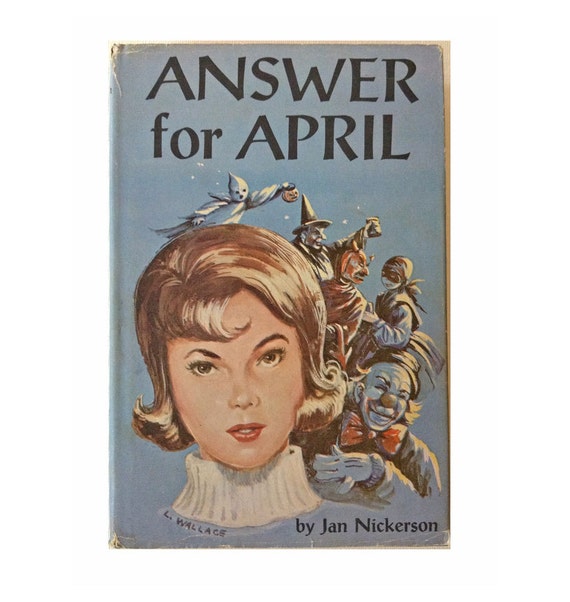
Answer For April (1963)
Answer For April
Jan Nickerson, il (cover) Lucille Wallace
1963, Funk & Wagnalls Company, Inc.
Although the others
had gone back into the house, April Anderson watched the car until it was out
of sight. She knew that Margo would insist that Jeff remove the Just Married sign
and the paper streamers before they left the country road and started along the
thruway. Her older sister had a large share of the Anderson dignity; Jeff,
being an advertising man, wouldn’t mind. If the other drivers honked at him, he
would give them a big grin, but Margo would be embarrassed. April thought that
she would be too, in a similar situation.
Sixteen-year-old April has just watched her older sister
Margo leave the family home for the last time.
Their mother is dead, their father is an aggressively helpless man, and housekeeper
Mrs. Berry isn’t enough to keep the home lights burning. April quickly learns
that Margo’s been doing a lot in the past few years, and that it all falls on
her now. Younger sisters Amy (14) and Pam (12) are basically hers now. Their 19yo brother Thayer Jr. is in Germany,
serving in the military, and doesn’t make an appearance.
Tall. Blonde. Suave. Hollister. April’s been semi-flirting with boy-next-door
Spencer, but is immediately intrigued to find a strange blonde boy on her front
doorstep. He’s Hollister Jones, come to
get tutoring in French from her impatient father (which is never quite
explained, given Thayer Armstrong’s obvious dislike of teaching and apparent
financial comfort), and triggers a girl-war between April and her long-time
best friend Norma.
The war is conducted largely by Norma, who reveals such
depths of malice which are all met with familiarity by April, so that you
wonder why our heroine was ever friends with her. Then again, April’s response to Norma’s
jealousy is to shrug; she’s oddly cold-blooded.
April’s real agonies are reserved for her family. Which is inevitable, given that her father
suffers from Fragile Father Syndrome (attacks many fictional papas whose wives
have been conveniently removed from this life by a tension-heightening author;
generally, FFS daddies are socially conscious, artistic, journalistic or
otherwise unimpeachably Better Than Thou. Daughters usually in thrall to them,
sons often avoid them.) Thayer, even regarded through April’s fond eyes, is an
asshole. An artist who loathes the
commercial work he does to pay the bills, he has a long history of vicious
arguments with son-in-law Jeff, an ad man, and reacts to modern music (apparently
jazz) as if someone had struck him very hard with a club. Which becomes more tempting, the longer he
goes on. His crowning moment is when it’s
suggested everyone take their own plate to the sink after dinner.
Father looked distressed.
The poor man. He spends his days in his backyard studio with
his Dachshund, Snodgrass, slaving over a hot palette, and here these evil women
want him to walk his own dirty dish to
the kitchen sink.
Modern music enters the plot through family friend and
independent career woman “Aunt” Irene, who invites April for a visit to Boston
and introduces her to various young friends.
One, a brilliant but moody musician named Tom, becomes infatuated with
April. You start to see Norma’s point.
“Every boy who comes
along. First Hollister, then Neil Burgess, and Tom Barlow, and, of course,
always good old Spencer. Why should you have them all?”
Sadly, this is about the extent of the clothing porn.
Saturday evening had
come. Temporarily renouncing all her responsibilities, April became a carefree
teen-ager preparing for a date. What a wonderful feeling! As she stepped into
her black suede pumps, she felt absolutely grown up.
A readable but not particularly lively book.
Random points
Amazing names – Thayer and Hollister and Spencer and
Snodgrass and Margo.
Virtually no physical description – clothes, house, etc.
Nada. You fill in all the blanks.
That Cover
The two younger Anderson girls throw a Halloween party,
true, but the cover is baffling. The
party covers a chapter and isn’t that big a plot, and the book itself goes from
the start of autumn through mid-winter.
Other books
Date With A Career (1958)
Destination: Success! (1959)
New Boy in Town (1960)
When The Heart is Ready (1961)
Circle of Love (1962)
Bright Promise (1965) historical
Double Rainbow (1966)
Peter Pembroke, Apprentice
Links
A review of Nickerson's book New Girl In Town at Forever Young Adult blog
Saturday, January 24, 2015
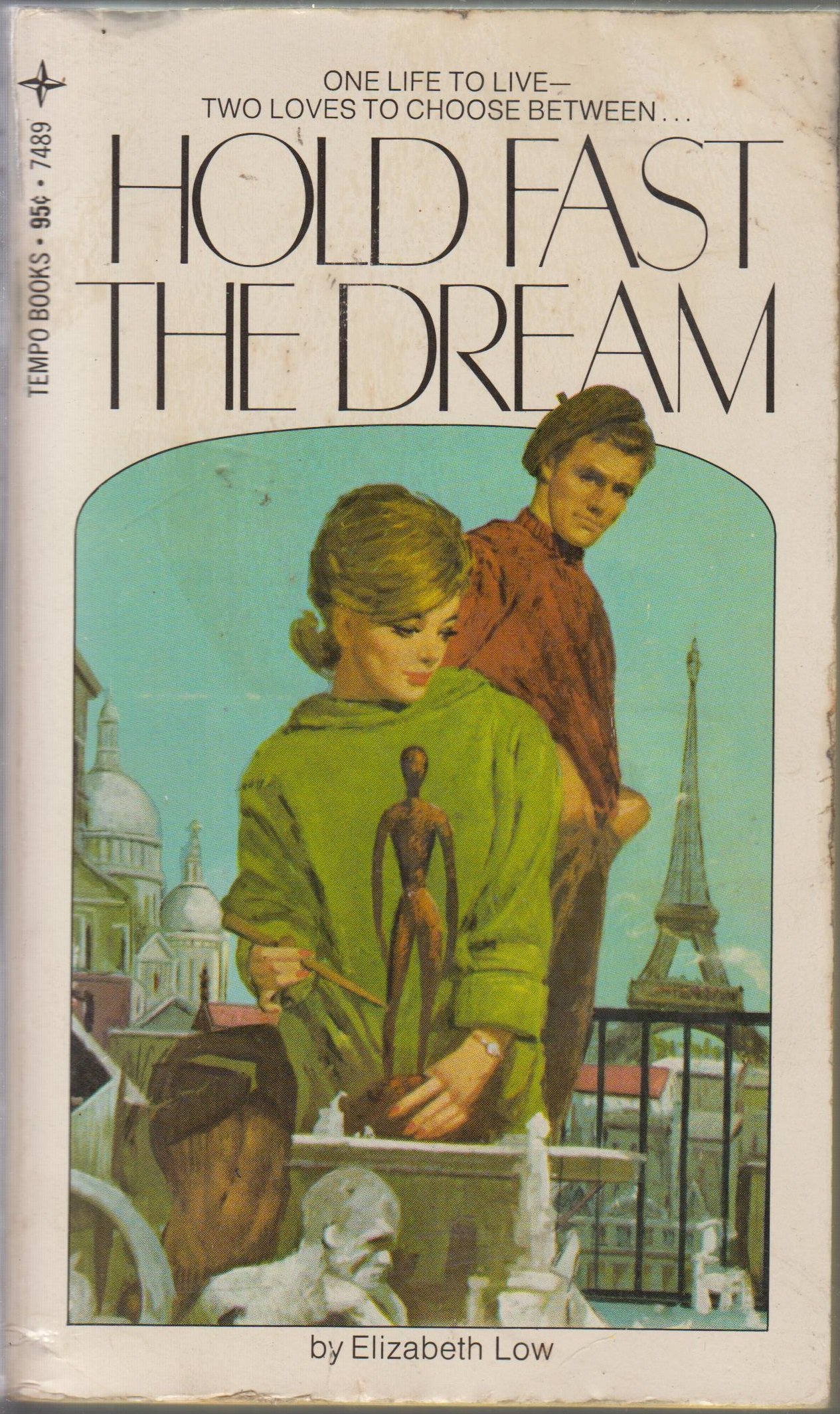
Hold Fast The Dream (1955)
Hold Fast The Dream
Elizabeth Low,
Harcourt, Brace, 1955
It was noontime in Paris. The medley of sound from bell-tower and boulevard fell faintly on Blithe Moreland's ears, but her hands did not stop work. She continued to press little pellets of clay onto the yard-high figure of a striding man on the stand before her, entirely absorbed in the construction of the human shoulder.
Blithe Moreland is in Paris for the summer, working in the highly sought-after sculpting class of Monsieur Pierre, hoping to impress the master and convince her family back home that art, not college, is her future. A weekend trip to Salzburg derails her plans, introduces her to the kind Lang family and gives her the artistic inspiration she's been seeking.
Quiet fell upon the crowd and, at the flourish of a trumpet, the famous Lippizan horses with their handsome riders filed through the gate in a slow line, eight white horses stepping proudly in unison like lovely, perfect creatures from another world. This was the world-famous Spanische Reitschule of Vienna, the Spanish Riding School; Blithe had often heard of it.
Moving to Salzburg to study the horses, Blithe is crushed to discover they've now gone on tour. She contents herself studying other horses, throwing herself into sketching and investigating the anatomy of the horse in preparation for someday creating a sculpture.
Apart from Blithe's artistic ambitions, two sub-plots involve a romance (of course) and the slow-developing relationship between the young American and the Austrians she comes to know. It's a relationship marked by humiliating mistakes and mutual confusion, but with goodwill on both sides.
Both the romance and the international harmony plots take a back seat to Blithe as an artist, a choice that pleases me. The slow pace of her progress is also likeable, and the resolution is believable. My only real quibble is with the "where'd that come from?" nature of the romance - it pops up at the end of the book as an accomplished feature of her life, but until about 5 pages before, she wasn't even aware she liked the guy.
LinksKirkus review
(atypically inaccurate)
Saturday, January 17, 2015
First Love (1963) short stories
First Love
Gay Head, editor; John Fernie, il (cover)
1963, Scholastic Magazines, Inc.
14 warm and glowing
stories selected by Gay Head.
Stardust by
Virginia Laughlin (originally Boys Don’t Understand)
16-year-old Wendy Warren dreams about the older brother of
the boy next door. 23-year-old Brian
complimented her and she fell head over heels, much to the annoyance of his
younger brother Tod.
A Girl Called Charlie
by William Kehoe
Quiet, thoughtful Charlotte Hollister finds a meeting of the
minds with Ridge Evans when he protests the “going steady” fad in their high
school.
Blue Valentine by
Mary Gibbons (orig in Woman's Day, Feb. 1954, shown to left)
16-year-old Angelo Colucci, oldest and only son in a family
of girls, chooses what he thinks is the ultimate feminine gift for his adored
girlfriend, Ethel-Irene Simons, daughter of a local professor. His instincts are perfect – except he doesn’t
realize how her parents will react.
The Walnut Trees
by Virginia Akin (originally in Woman's Day Magazine)
Jenny Lee’s crush on a handsome teacher is resolved in an
unexpectedly gracious way when his engagement is announced.
Once Upon A Pullman
by Florence Jane Soman
He raised on eyebrow.
“Just fasten your seat belt and let me take care of the landing.”
19-year-old William Fowler tries to impress a girl he meets
on a train by cribbing from a novel about a smooth seducer.
Epicac by Kurt
Vonnegut, Jr. (originally in Collier's)
A machine helps a man woo his coworker, and falls in love
with her itself.
Sixteen by Maureen Daly
The narrator tells of a night out of time, when she goes ice
skating and meets a boy and waits for him to call and realizes he never will. A
strange, dreamy story.
Eighteen by
Charlie Brodie
The boy from Daly’s Sixteen
tells his side of the skating night.
Prelude by Lucille
Vaughan Payne (originally in Seventeen)
Nancy is popular, pretty and comfortably middle-class; her
only “quirk” is an unusual affinity for classical music. Stephen in invisible,
awkward and poor, but he also loves music and plays the piano. They fall in love, but Nancy has to decide if
she can accept the change their dating will bring to her life of popularity.
Tomboy by Gertrude
Schweitzer
Frances is uninterested in the social/romantic life at
school, and resists growing up. Forced
to attend a 16th birthday party for a cousin, she quickly plans with
old friend Skeeter to slip out. To catch frogs in a nearby marsh. Then she
meets a college boy…
Bittersweet by
Arlene Hale (originally title "First Love")
Leslie and Claude were high school sweethearts. Then he went
to college, and suddenly, stopped writing. When he comes home for winter break,
they’re forced to confront the truth.
Who is Sylvia? By
Laura Nelson Baker (originally in Seventeen, September 1959 issue, shown left)
Adam falls in love with quirky, aloof Sylvia, who recently
moved to town and lives with her grandparents. When parental decisions suddenly
end their relationship, Adam faces the ephemeral nature of love.
Theme Song by Dave
Grubb
Edith, a dreamy girl working in her father’s small
restaurant, finds romance in the love life of a young man, a soldier posted at
the local base, who comes in and talks about the girl he left behind.
Tough Guy by Peter
Brackett
Surly, angry Byron is always ready to fight but secretly is
in love with Nina and even writes a poem about her. The verse falls into the
wrong hands, and destroys his bad boy rep.
But it also gets Nina’s attention.
The authors
Several of the authors were difficult to find online. This has to be one of the most unlikely places to encounter Kurt
Vonnegut, Jr. His short, EPICAC, was first published in 1950, in Collier's Weekly, and the central figure (a computer) was based on the real-life ENIAC.
Gay Head
Hi There, High School! (1960)
Etiquette For Young Moderns (1954)
Dear Gay Head (1962)
Boy Dates Girl (1961)
Party Perfect (1963)
Florence Jane Soman
Love Is A Lonely Thing (1953)
A Break In The Weather (1959)
Picture Of Success (1966)
Maureen Daly
Seventeenth Summer (1942)
Sixteen and Other Stories (1961)
Acts of Love
First A Dream
Arlene Hale
a prolific writer of nurse romances.
Laura Nelson Baker
Somebody, Somewhere
The Special Year
Links
Subscribe to:
Posts (Atom)